Mountains, Lakes and Horses
Reading and Listening
- A brief history of Kyrgyzstan by KJ Smith
- The great Game by Peter Hopkirk
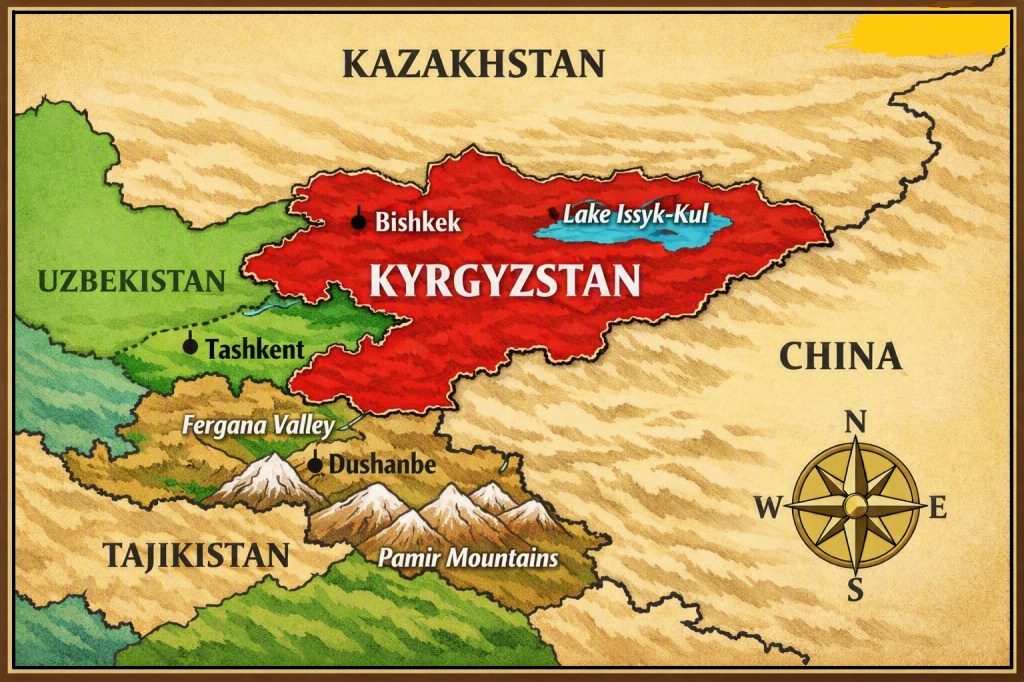
Landlocked Kyrgyzstan was never on my initial list of destinations to visit. I was aware of the “stans” but hadn’t really paid too much attention to what they had to offer.
There are five central Asian “stans”: Kazakhstan, Tajikistan, Turkmenistan, Uzbekistan and Kyrgyzstan. These five were once all part of the Soviet Republic. Another two, Afghanistan and Pakistan are former British territories.
Many of Kyrgyzstan’s population of around 7.5M people, lives in rural areas. Bishkek is the capital city. Over 75% of Kyrgyzstan is mountainous and the country has several mountain lakes and glaciers. Construction and Agriculture are big drivers for the economy and there’s an emerging gold mining industry.
So, what is there to say about my visit to Kyrgyzstan? Well, Much Better Adventures had a great hiking trip itinerary and so we joined a group travelling there to walk, wild camp and explore what the country has to offer.
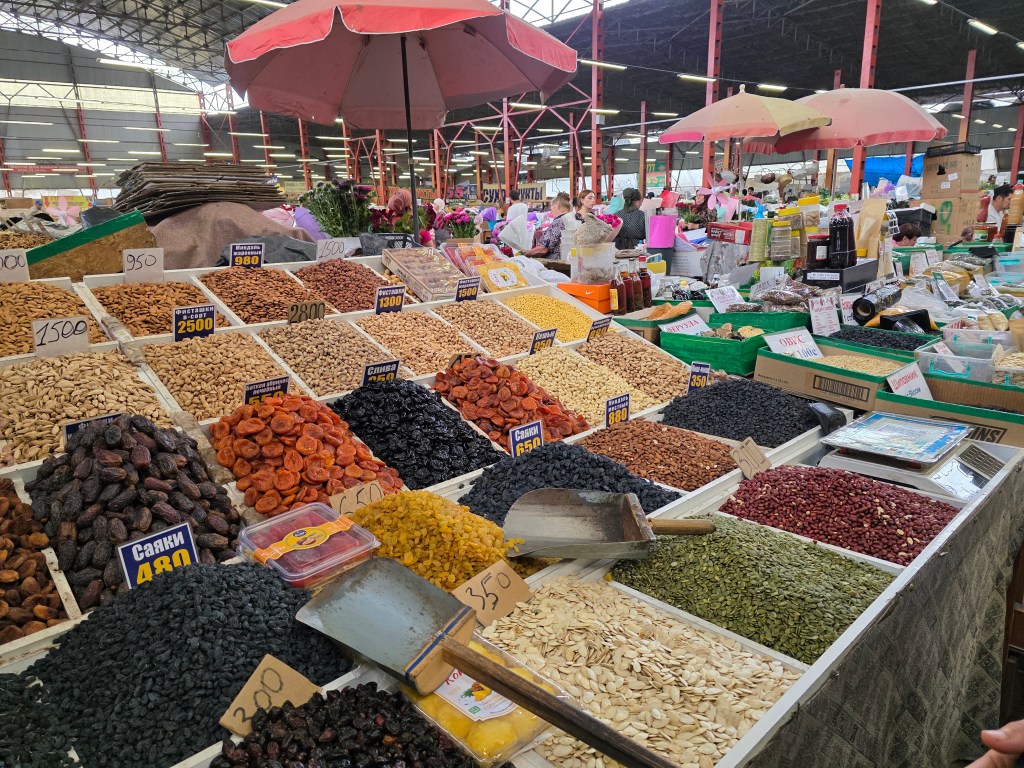
On arrival in Bishkek, we headed out into the city to explore the Osh Bazaar. It was created in the 1980’s and is one of the largest, where you can buy anything from food to clothes to electronics. The city was preparing for the Nomad games, and my first impression was of a clean and well-organized place, sunny hot and the historical influence of the Soviet Union was clearly visible. Our guides explained a little of the history behind the Presidential palace buildings (White House) and monuments around the centre. Until relatively recently, political unrest and changes in leadership had been quite common but Kyrgyzstan was now undergoing a period of stability which was perceived positively.
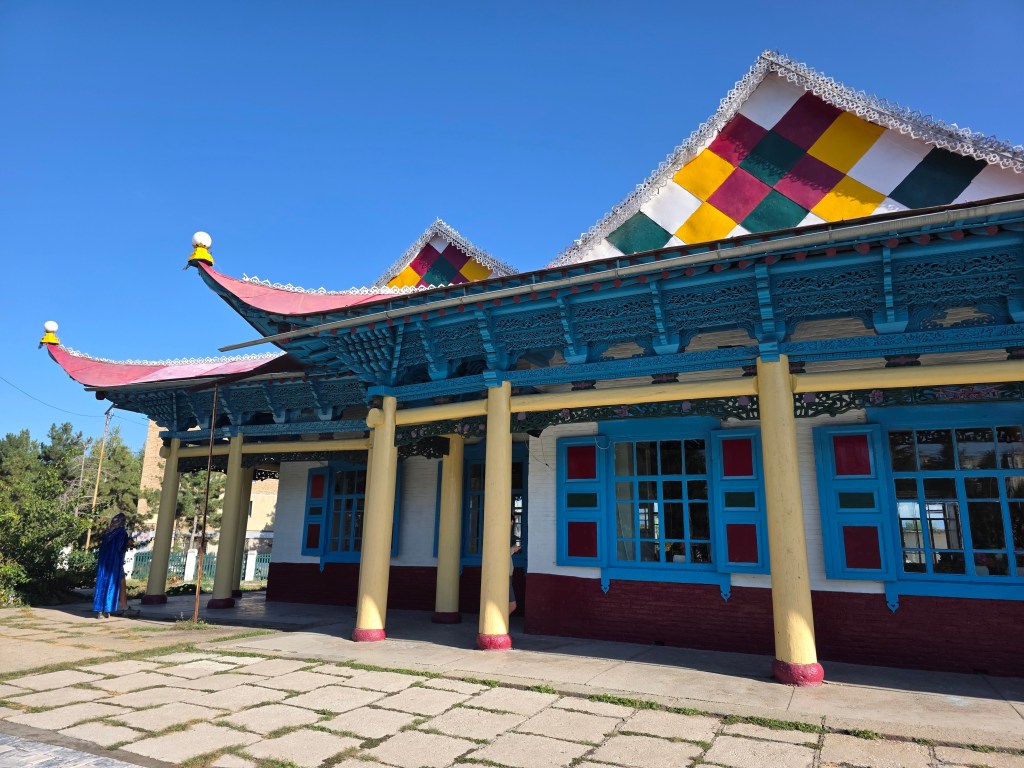
The next day we travelled towards Karakol, close to the Tian Shan Mountains, first stopping off to find our feet for a “warm-up” hike of around 3km along the red sandstone of Konorchek Canyon. A few hours’ drive later we arrived in Karakol, originally a military outpost used by the Russians. Here we visited the Dungan Mosque, built by Chinese Muslims using wood. From here we started to get our first real glimpses of the impressive Issy-Kul lake, it’s the 2nd largest at high altitude in the world (Lake Titicaca in Peru/Boliva being the biggest).
The Seven Bulls
The seven bulls’ – 7 red stone cliffs at Jety Oguz valley, has several legends attached to it. One of these stories is of a cruel khan who captured the wife of a rival and then held a celebration for each of seven days, sacrificing a red bull every day before finally killing the woman. As the story goes, nature became furious and the woman’s blood on the cliffs caused boiling hot water to erupt from the earth and kill the khan. The red rocks are a reminder of the event. Eighteen kilometres of hiking later, on a lovely sunny afternoon, we arrived at our resting place for the evening. My first experience of sleeping in a Yurt, next to a fast flowing (and very cold) river with horses and chickens on the grounds. A sauna in a wooden shed, fish soup plus grains and beef for dinner, and a good night’s sleep lay ahead.
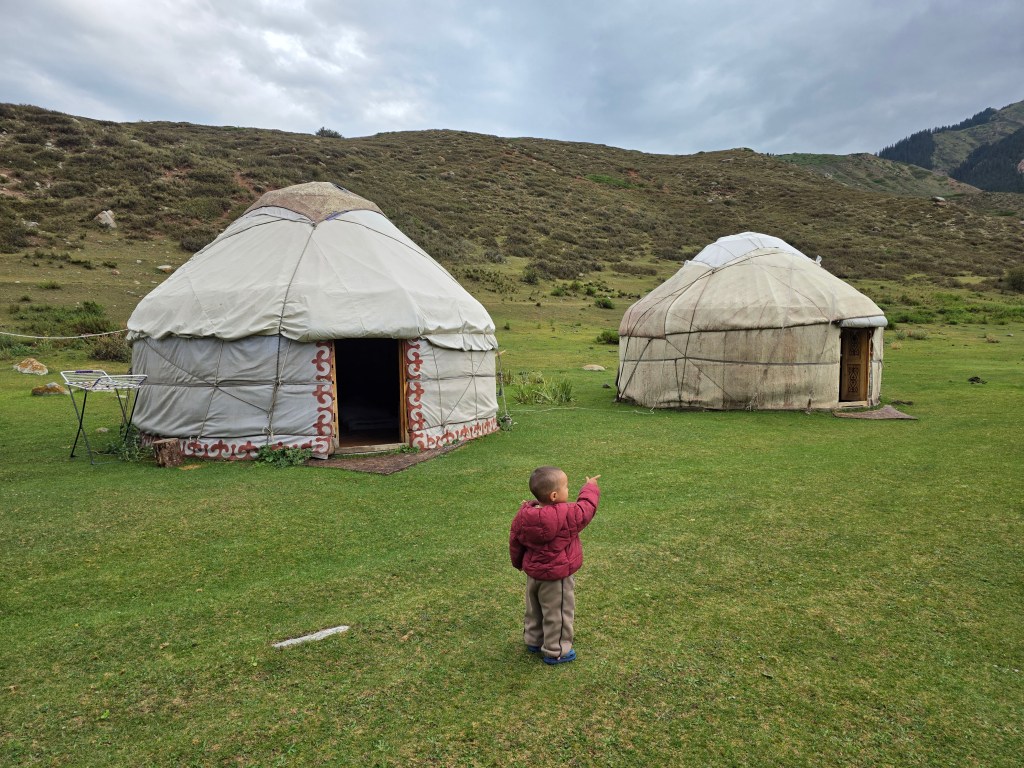
Waking up with a rising sun and horses was a good start on the following morning.
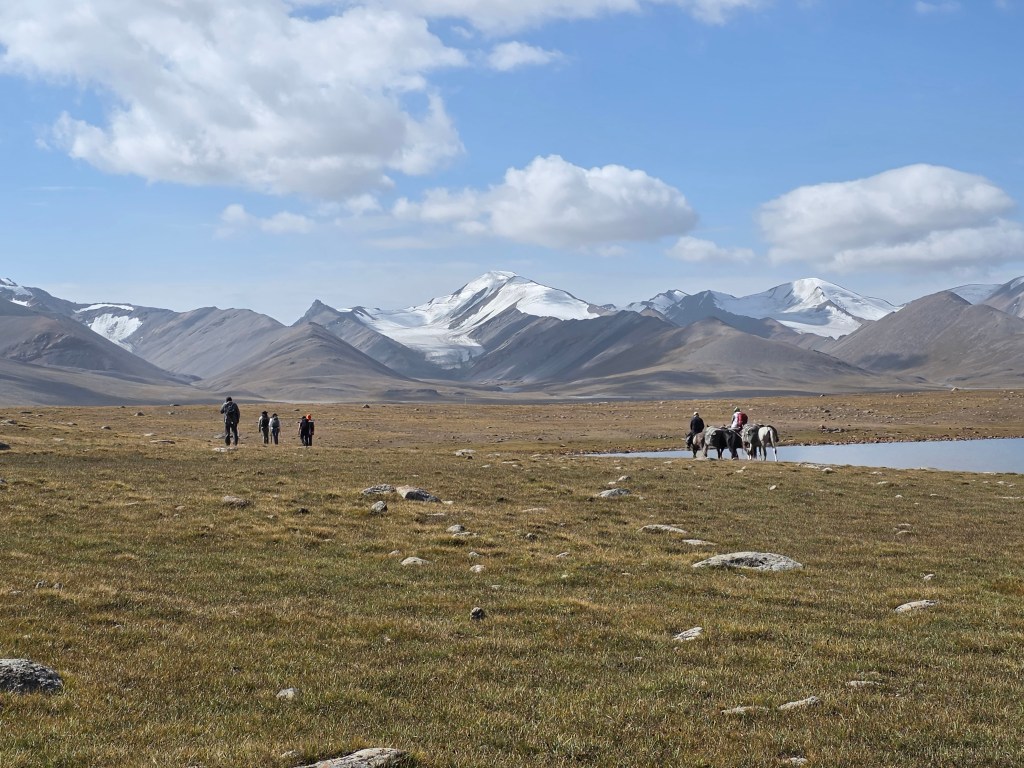
Hiking in the Jukku Valley was great. It was the first time we used the support of horses to carry food, camping gear and bags, and the view along the valley was spectacular. Walking through the streams was cold but in the warm sun nice at the same time. Tonight, would be the first night of wild camping, and after some hot tea, the group went off in search of firewood for the evening campfire.
Over the next couple of days, we hiked along part of the Silk route through Jukku Valley taking in the lake, the high mountains on either side (which was a visual pleasure), birds of prey overhead and a history lesson about how travellers used to have stops spaced out every 20km in village settlements to service their needs and allow them eat, drink and recover from their journeys in ancient times.
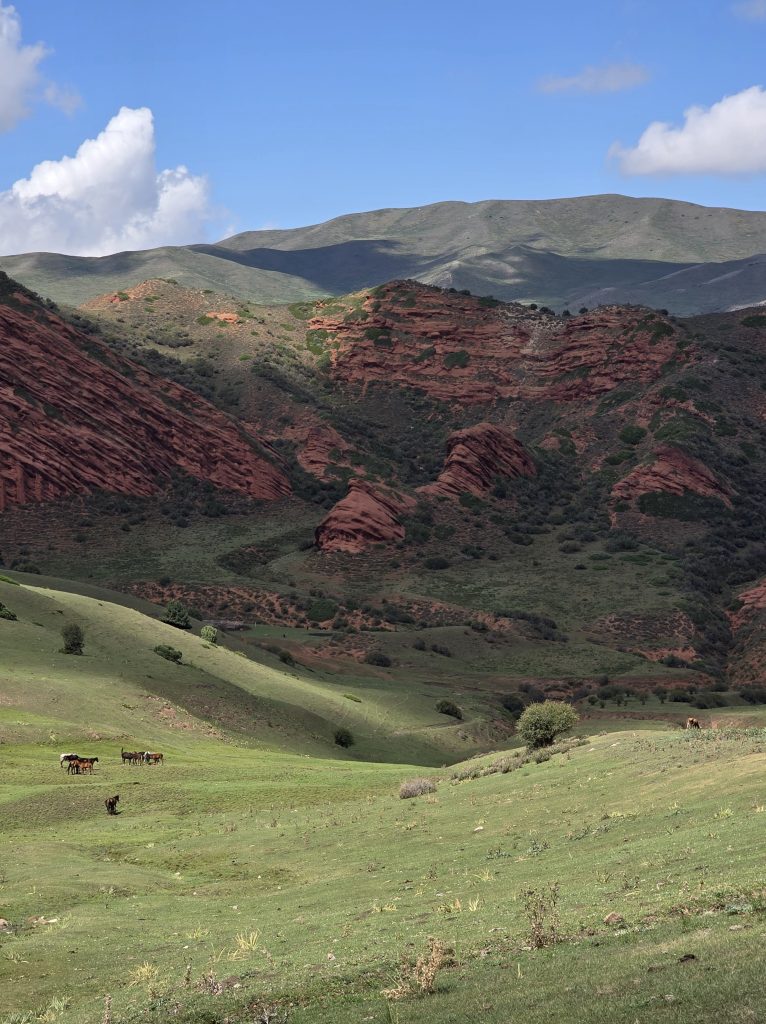
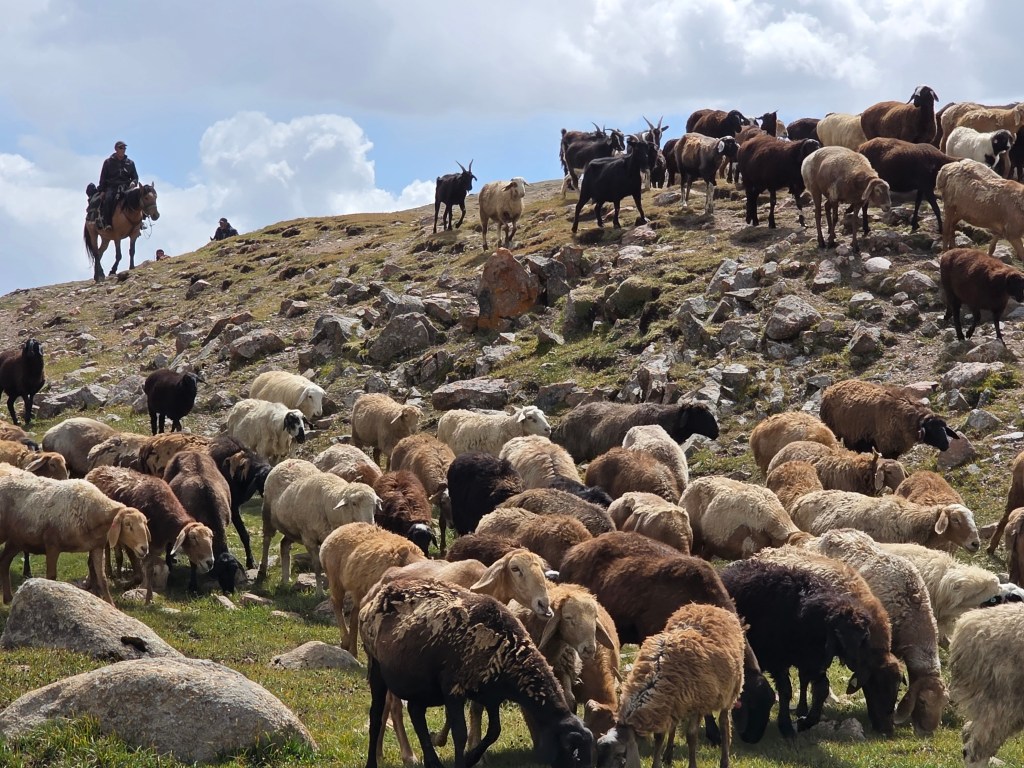
Covering some 17km to 22km per day, there were several memorable moments, including Turkic graveyards and Persian writing on rocks dating way back in time (possibly the 6th century). Arriving at our campsite by the lake, the final bit was done on horseback crossing the water. Dipping in the lake at the end, it was freezing but a wonderful location. In the Jukku pass hike, Marmots and steep climbs made the walk even more worthwhile. At one point a Shepard passed by, and his sheep “flooded” the hillside.
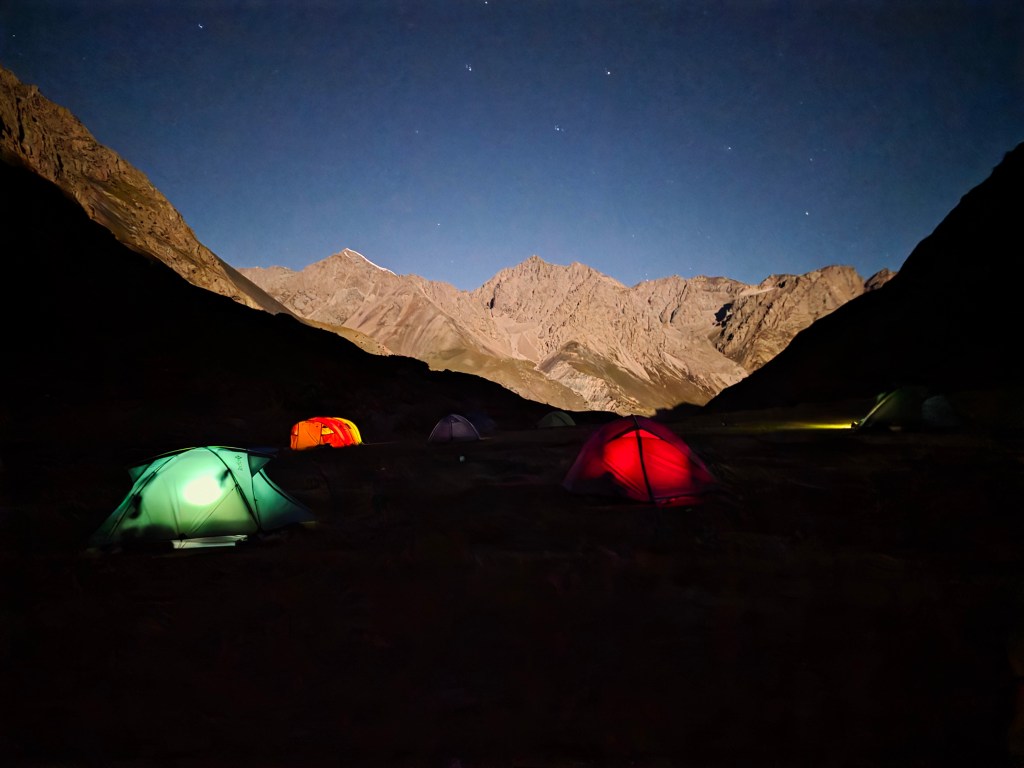
Views from the top of the pass are impressive. Row upon row of mountains, with sights down to the lakes and campsites and then the climb up to 4000m which was well worth the trek to find a mountain cabbage…apparently very rare! On the final night of camping at the Arabel Syrt (3680m in altitude), with a full moon glowing and the lights of nearby gold mines glowing in the distance, I was glad to be in a warm sleeping bag. The thunder and lightning, plus hailstones outside the tent were a reminder of how exposed we were at that location to the elements.
The journey back to Bishkek, started with a short hike (3km) to meet the van waiting to carry both us and our bags back to the city. From there we drove past the gold mining sites and Chinese owned road, and power generation construction works, along the “32 turns” road to the capital. There is a lot of building happening, and it’s difficult not to have mixed feelings. On one hand the construction goes directly through some wonderful hillsides, and the views will change forever but its also great progress and clearly the boost in infrastructure might be transformational for the economics of the country.
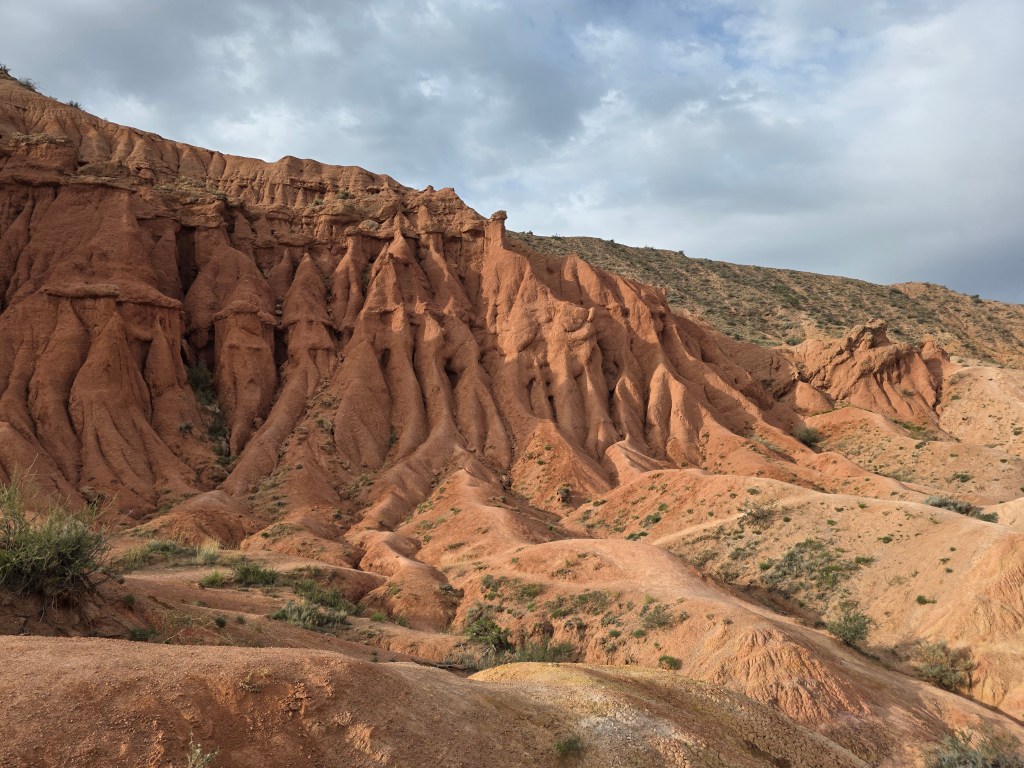
On the way, we stopped off at Skazka canyons. These are also known as Fairytale Canyons and are sculpted into quite interesting shapes that reminded me of Cappadocia in Turkey. From there we had a quick dip in the lake and then met the “Eagle hunter” for a demonstration of their bird’s hunting prowess. Nomadic tribes have been training eagles for thousands of years to help them collect food and furs.
Arriving in Bishkek around 5pm, the business of the city was clear. The Chinese premier was visiting Bishkek as well as Indian and Russian leaders, plus many more. We witnessed the motorcade of cars past our hotel window and the neatly organised and very well-dressed police officers standing at the roadside.
2026 World Nomad Games
The opening ceremony of the World Nomad Games was in Bishkek. More than 90 countries were participating including (much to my surprise and delight) 50 athletes from the UK.
An array of buses led to the Bishkek Arena; the information flow was a bit lacking but after the initial confusion about which queue to stand in and what time they might leave, multiple buses made their way through the streets out of the city centre. After a journey of around 30 minutes, we arrived at the arena, impressive in size and right next to a football stadium.
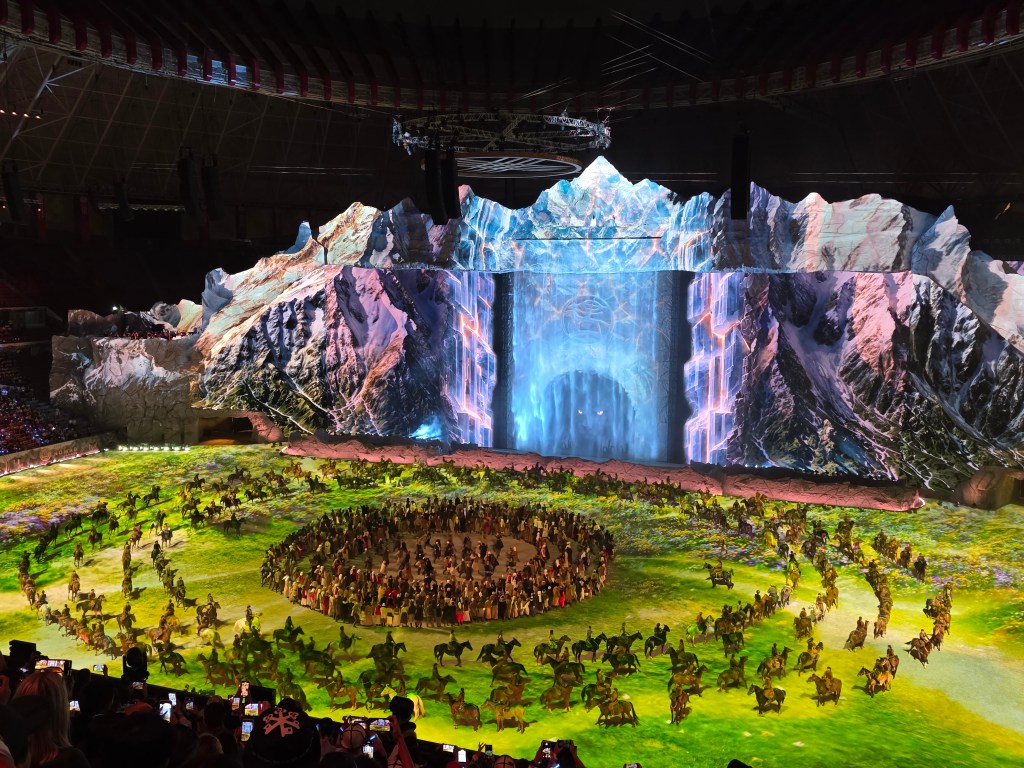
Our first challenge after clearing security, was finding something to eat. It was clear the priority had been on finishing the building on time, so some of the refinements e.g. food stands, were quite basic and overcrowded as everyone scrambled to grab what food was on offer. Finding our seats, the arena itself was amazing. The first couple of hours of the opening ceremony consisted of music acts, mostly from Kyrgyzstan and all excellent. At one point a former member of the pop group Pussy Cat Dolls, was seen singing from the top of a vast mountain shaped stage.
Then for the next hour, world leaders from China, Russia, India, Pakistan, of course Kyrgyzstan and many other nations started to arrive to witness the opening. The light-show, the atmosphere, and the people in the stands made the atmosphere electric, it was a great show and very well-orchestrated.
My final memories of the ceremony before heading for the exit area and buses patiently waiting to take us back to Bishkek, was of the dozens of horses being expertly guided around the grounds all neatly choreographed. Then the grand finale, fireworks lit up the sky to signify the opening ceremony was at an end.
Highlights and Learnings
- The views of Izzy-Kul Lake. It’s enormous and at least while I was in Kyrgyzstan, magnificent to look at, especially on a sunny day.
- A demonstration of “Kok-Boru” at the opening ceremony of the World Nomad Games: It’s a team game played on horseback where riders compete to seize a goat carcass and place it in the opponent’s goal. Shortly followed by “Er Enish”: Wrestling on horseback, where riders try to pull each other from their saddles.
- Learning a little about Yurts. These round structures traditionally used by nomadic people in central Asia, are built with wood and insulated with wool and other materials.

