The Chocolate Islands
Reading
- Sao Tome a novel by Paul D. Cohn
- Bradt Guide to Sao Tome & Principe
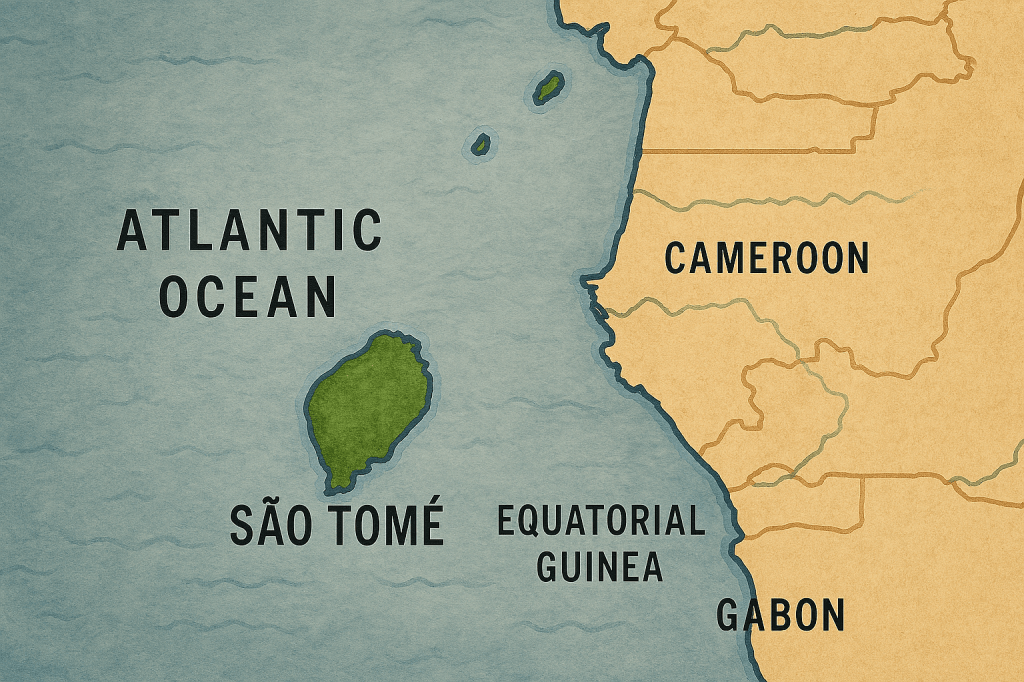
A trip to Sao Tome & Principe had been on the shortlist for a few years but had been put off, mostly because from the outside looking in, the tourist infrastructure seemed as if it still needed time to develop. Many of the reasonably priced places to stay were on Sao Tome Island and the more “exclusive” Principe advertised slightly more luxurious places.
In the end, good old-fashioned curiosity meant that waiting any longer wasn’t an option. Flights via Lisbon, were booked and we set foot in Sao Tome in mid-December.
It’s Africa’s second smallest nation (The Seychelles is the smallest) by land mass and has a population of around 235,000 people.
There is a quite a history behind the place, from colonization by the Portuguese and being a major producer of sugar, to being an exporter of coffee and cocoa. Today, its economy is still heavily reliant on cocoa (almost 80% of its exports) but it’s also developing an oil industry.
Stepping out of the airport in Sao Tome, the vibrancy of the place immediately hits you. The first stop was a small kiosk nearby the Taxi stands to get a local SIM card (4G works remarkably well all over the Island) and then a short taxi ride to our hotel, Sweet Guest House which is close to the city centre. This was our base for a couple of nights and in the following days we explored the north coast of the Island taking in Guadaloupe, Lagoa Azul, Praia das Conchas and Praia Tamarindos.
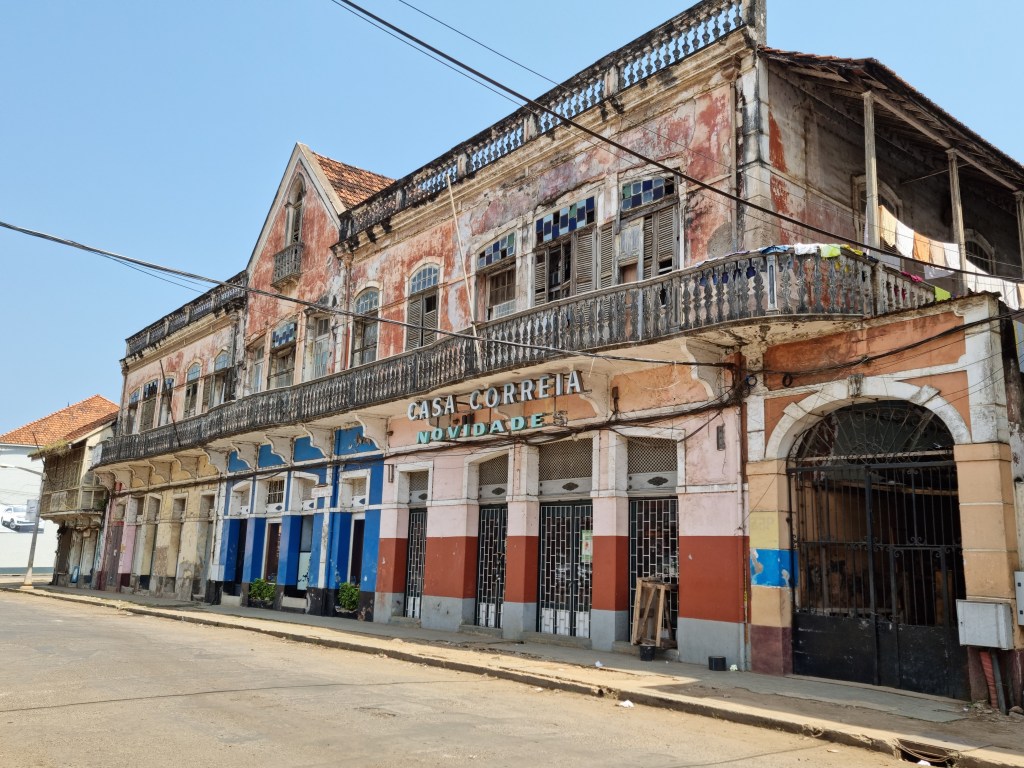
Our first days were spent exploring the town of Sao Tome, wandering past local shops housed in buildings with a faded grandeur and people watching as the men and women chatted outside taxis stands. In the centre of the town, close to the new market area is Praca Yon Gato. A lively place with vendors selling goods and nearby cafés with a good atmosphere. On one occasion we enjoyed lunch outside on the terrace of restaurant in the area, and in the evening went back to a bar / restaurant which had a great local band playing music to the local clientele.
Guadaloupe
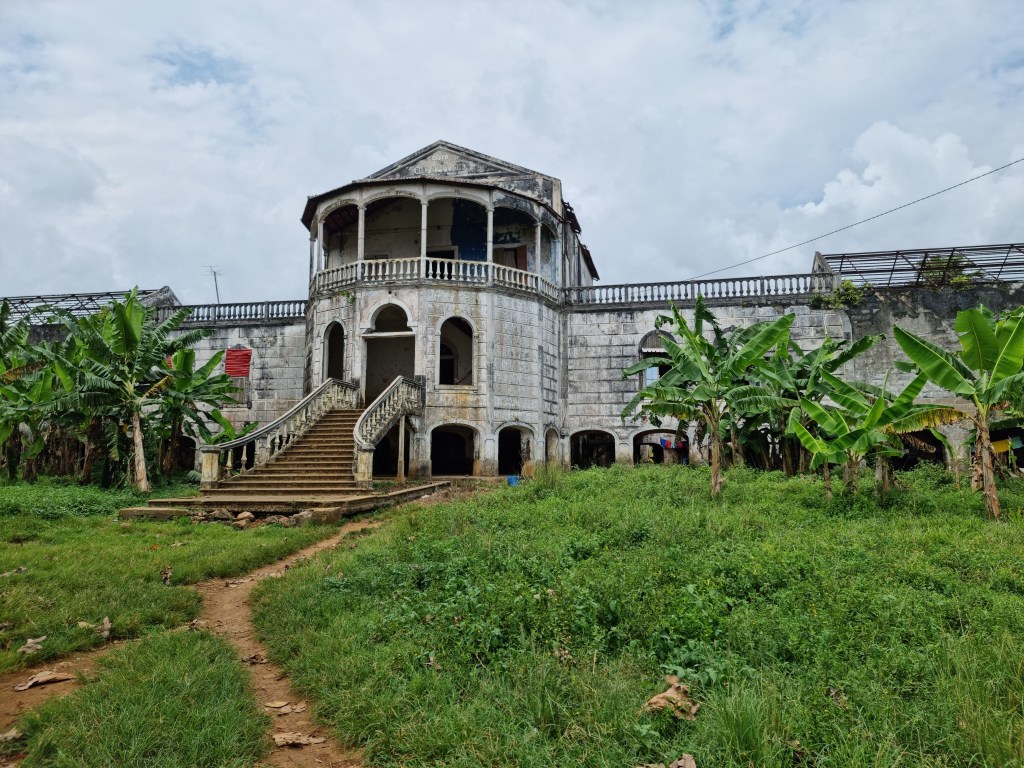
Not far from Sao Tome is a now abandoned Hospital in Roça Agostinho Neto. We had a tour guide take us around the ex-plantation and several of the buildings. It has clearly been abandoned and many of the inhabitants (descendants of people originally from Cape Verde) live in very poor conditions. It sits on a plantation site that was one of the major Cocoa bean producers on the Island. Walking up the stairway into the hospital building is quite eerie, you can feel the history of the place and can only imagine what it must have been like in its heyday. On the day that we were there, one or two people were hanging out on the balconies and children were playing in the hallways, it was desperately in need of repair and modernization.
Neves
From the town of Sao Tome, we headed north and stayed at the Mucumbli lodge for a couple of days. Perched on a cliff top location overlooking a pebble beach, it was lovely place to just chill out and relax. The accommodation is wooden chalet style rooms with their own verandas. Breakfasts, lunches and dinners gave plenty of local Sao Tomen choices.
They were able to organize a hiking trip up the Pico, which is the Islands highest point (2024m). It took us just over 11 hours to cover a distance up and down again of 24.5km, with a bit of scrambling and climbing involved along the way. The sight and sound of different birds, the occasional waterfall and our guides pointing out the cocao and other plants made for a good but slightly tiring day out.
Sao Joao dos Angolares
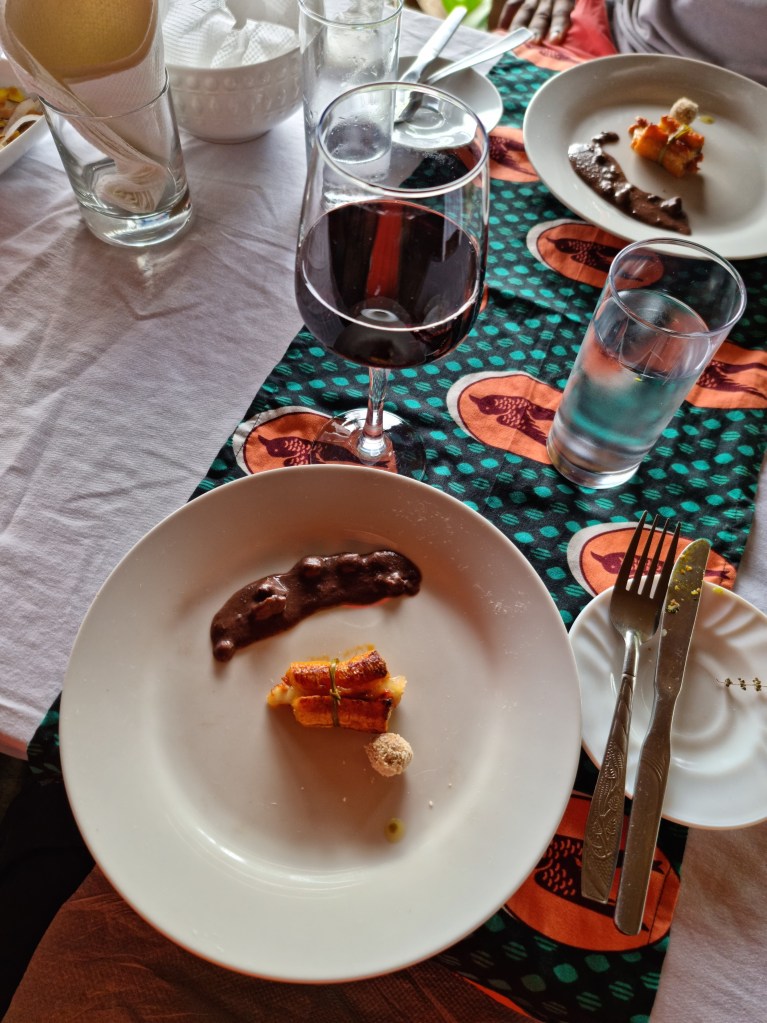
One of the highlights of this trip for food, was found in Roca Sao Joao dos Angolares. Set in a restored colonial building on an ecotourism plantation and with wonderful views from the veranda, it was a good dining experience, plus meeting the head chef (Joao Carlos Silva) was a bonus. The food was excellent and service efficient in an atmosphere that was lovely.
Highlights and Learnings
- Seeing Vanilla plants and visiting a small distillery
- Learning more about the process of dealing with Cocao and Coffee beans
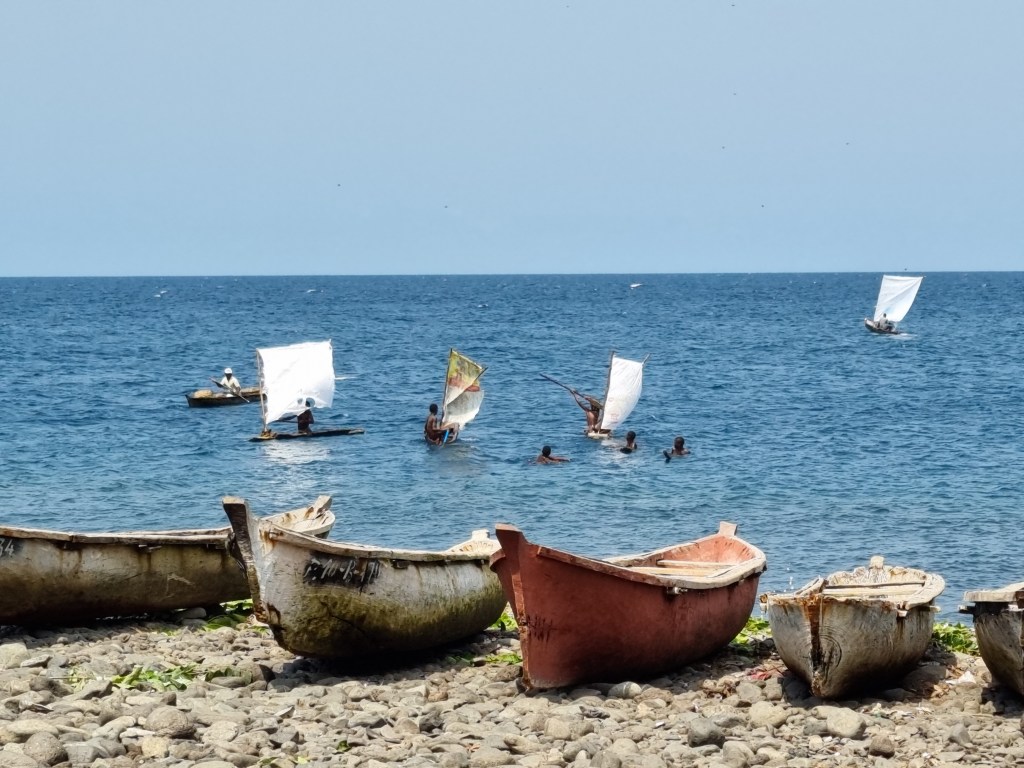
- The peaceful beaches around the Island and watching the children with their boats (made from any available materials they could find) sailing in the water
 BOHOMAROON