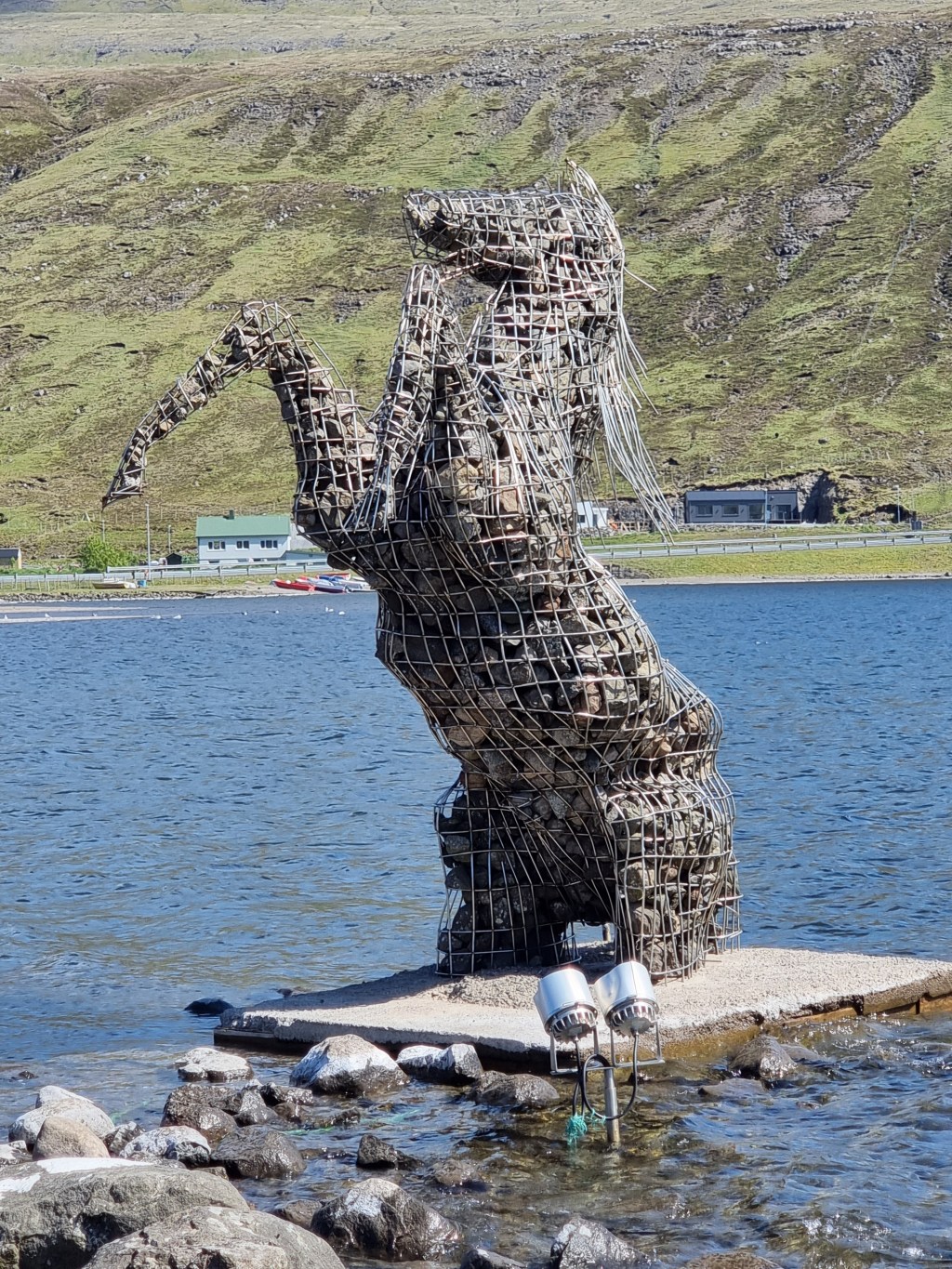
18 volcanic islands in the North Atlantic, part of the kingdom of Denmark
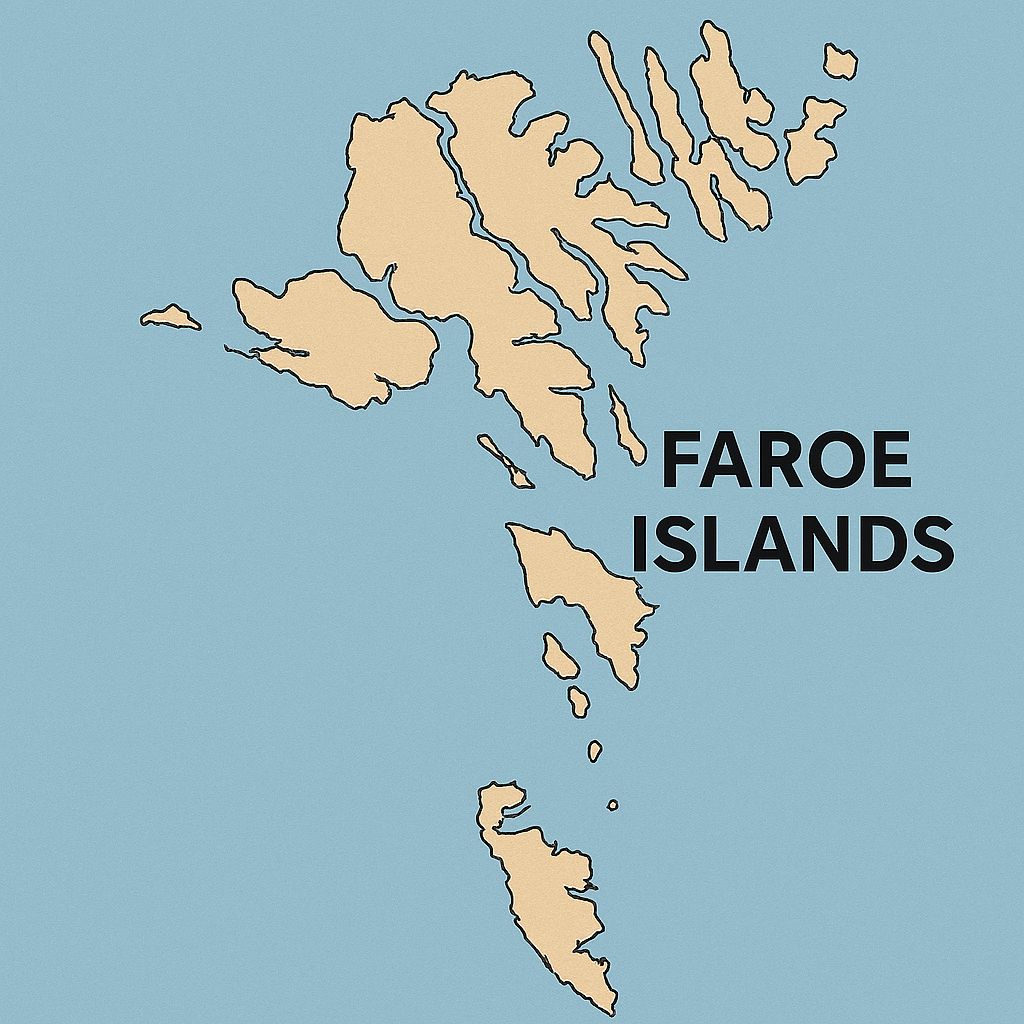
A group of 18 Islands between Scotland and Iceland in the North Atlantic Sea, the Faroe Islands was simply a place I never really imagined I would be going to. Then came the opportunity to join a team of test pilots with Rat Race, and it became too good an opportunity to miss.
With a total population of around 55,000 people, it’s tiny.
Our route there was via Copenhagen and stepping off the plane it was a beautiful blue-sky day with temperatures around 17 degrees centigrade. As we later found out, that was quite exceptional and certainly not normal for any time of year.
The first night was spent at Hotel Vagar, close to the airport, modern and very comfortable. Having grown up in the London area and spent most of my time in big cities, the tranquillity was striking and very welcome following a busy working week.
After meeting some of the event organizing crew, we took a walk into town to find a lunch spot and buy a few snacks. One of the very few cafes was completely full, so we ended up sitting outside with some supermarket sandwiches watching the world go by.
Day 1
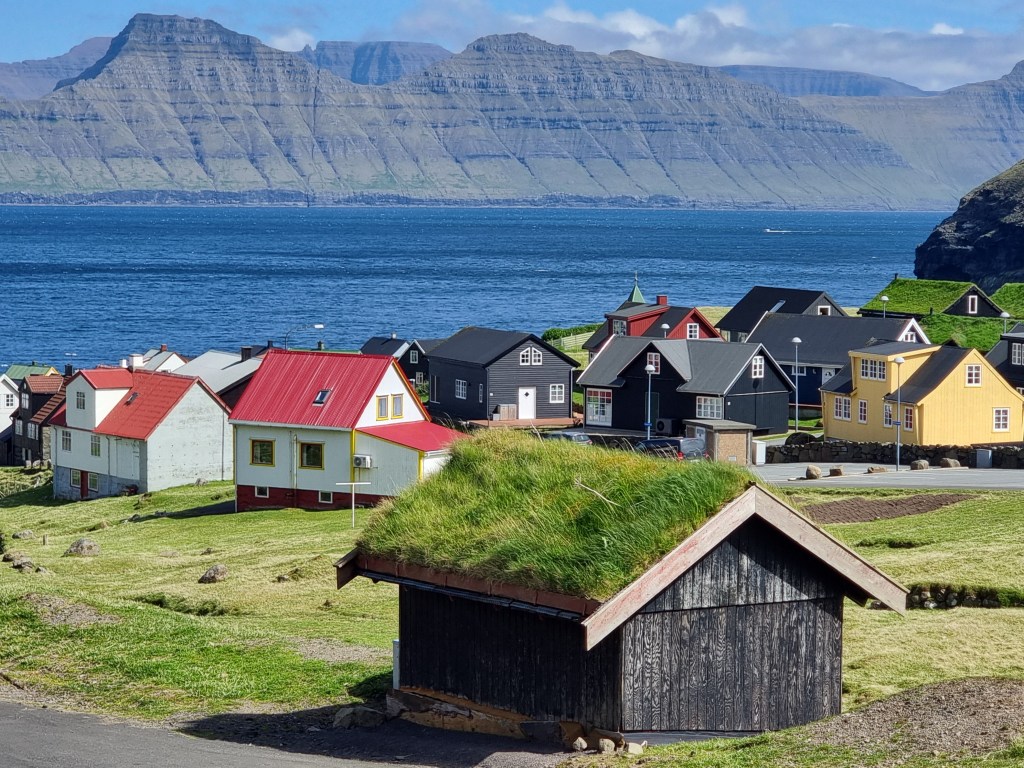
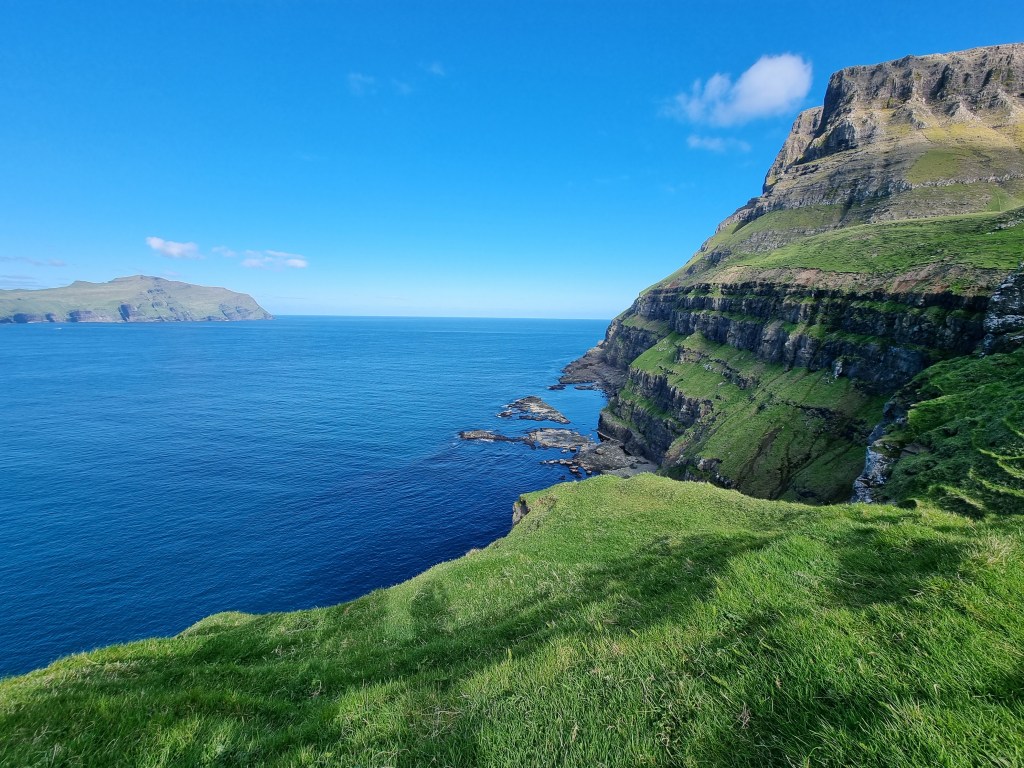
15km Trail running through small villages, houses with “living roofs” and a serene, relaxed environment with little in the way of either traffic or people. That took us from Gasadalur by the water’s edge, to Lake Leitisvatn at Sorvagur for some kayaking, covering around 11km over the next few hours and taking in the surroundings. Then we completed the day with a final 3km run to the Giljanes Hostel and Campsite. Dorm rooms and a pizza dinner with glass of wine to end the day.
Day 2
Sandavagur was the starting point for our Gravel bike ride for the day, ending in Gjogv. We covered a total distance of 64km which took a little over 5 hours including some pit stops across three of the Islands. Mostly cycling along the roads, it was a real pleasure, very little car traffic, with great views along the way. Most of the journey gave a pretty good view of water but one memorable moment was spent cycling in an underground (under water) tunnel. The underground tunnel near to Oyrarbakki opened in 2020. It’s around 11km long and connects the capital city of Tórshavn to the towns of Runavík and Strendur (on Eysturoy island). It contains the world’s first undersea roundabout as well as art installations. It was certainly quite a sight to be cycling past what looked like dancing figures and multiple colourful lights in an otherwise completely dark tunnel.
We rounded off the day with a short but steep hike in Funninggur, at one point doing a “Crab walk” at the hilltop because of the high winds which could almost blow people off.
Day 3
Hiking from Saksun to Tjornuvik
Starting out near the Heritage Farm and church at Saksun, we hiked for just under 3 hours. There were a few challenges at the start of the walk, first, we needed to find the right path, second, when we did find a path a very unhappy landowner told us that we should not be hiking over this land and need to respect the location that we were in. After asking for (and being refused) correct directions, things got moving but it was a bit of an unnecessary headache.
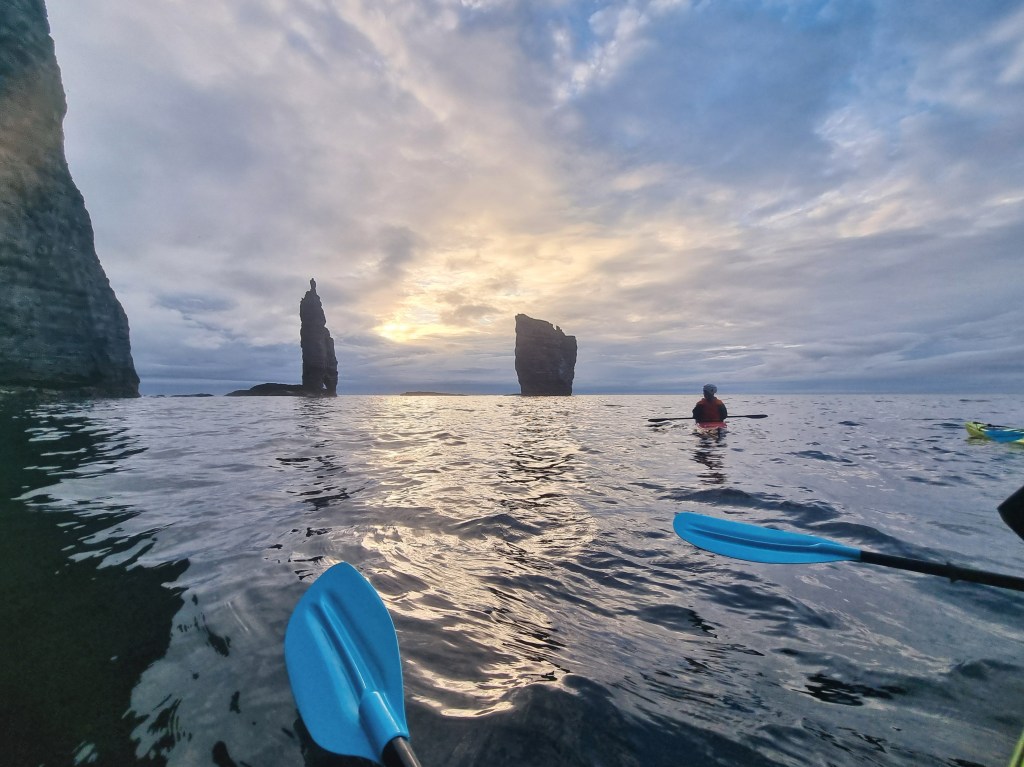
The walk itself along hilltops and finally ending with views overlooking the water with the “Giant and the Witch” in the distance were spectacular. As the legend goes, a Giant (Risin) and his wife, the Witch (Kellingin), tried to steal the Faroe Islands. They toiled through the night, but could not move the islands, as the sun rose, they were petrified. It’s a nice story for a couple of impressive rocks sticking out of the water.
That evening we went out Sea Kayaking starting around 8.30pm, which was still remarkably light. With line of sight of the Giant and the Witch, we were able to paddle into nearby caves in the hillside and watch the puffins nesting on the rockfaces. By 11.30pm, it was time to head back for some sleep at the guesthouse.
On our final day in the Faroe Islands, the weather was “back to normal” heavy rain, cloudy and grey. During the previous few days, we had been spoilt by very mild conditions with little in the way of rain and warm (for the time of year) mid-teen degree centigrade temperatures. Still, the experience of being in the Faroes will remain a warm memory for me, there is a calmness and relaxed pace of life that allows you to escape for little while.
Highlights and Learnings
- The grumpy landowner not wanting people to walk on his land – he had a good point. The land needs to be maintained and any small contribution that walkers can offer, may not be sufficient for upkeep
- Houses with living grass roofs are a sight to see
- Atlantic salmon is farmed in the Faroe Islands
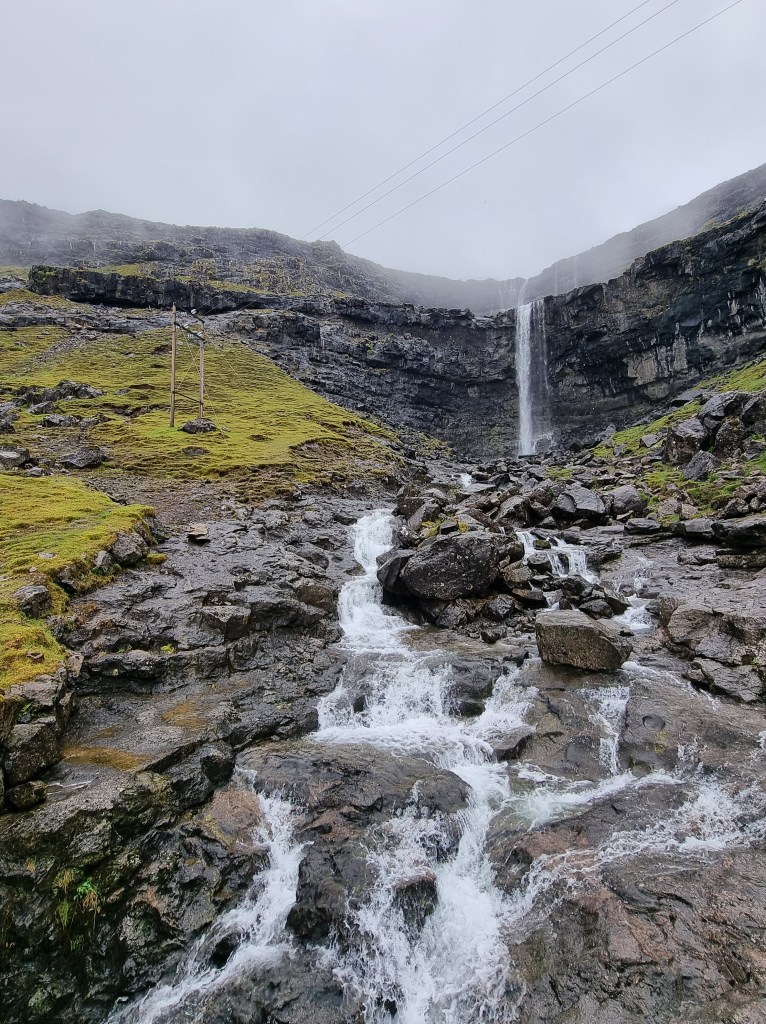
- The impressive views of waterfalls on the hillside as we were leaving on the last day and black sheep taking refuge from the weather
 BOHOMAROON