The republic of Colombia
When the discussion came up about the idea of going to Colombia, the first thought on my mind, to quote a famous tennis player was “you cannot be serious”. My knowledge of the country was influenced by the Netflix series Narcos, and images of Pablo Escobar. What little I knew about the place did not fill me with confidence that this was the kind of trip that I would find relaxing, fortunately, I was wrong.
Apparently, Colombia gets its name from the surname of explorer Christopher Columbus with an added Latin suffix. Hundreds of years of Spanish colonial rule has heavily influenced the language, culture, architecture and ways of living. The 1960s saw the rise of guerrilla groups (FARC, ELN), which became much more acute in the 1970s onward by the drug’s trade. The government signed a Peace Accord in 2016 with the FARC, ending years of armed conflict. Fast forward to the present day and Colombia has seen much improved stability and economic growth.
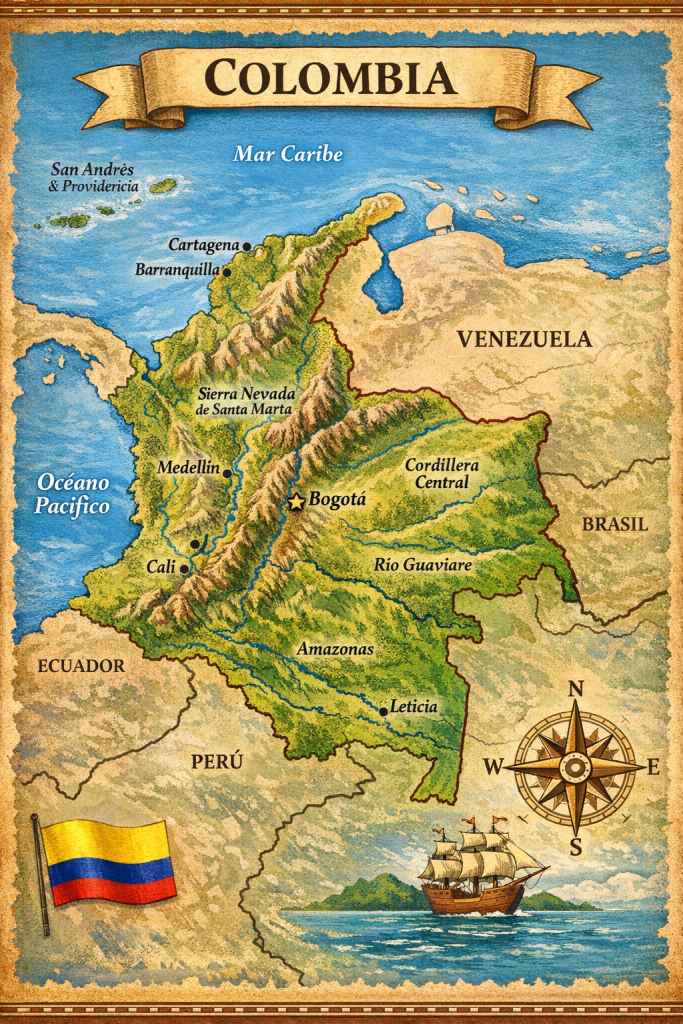
There are around 53 million people in Colombia today and its very urbanised. We flew into the capital city of Bogota in mid-December 2015, the plan was to explore many of the major towns, spend Christmas in Cuidad Perdida and New Year in Cartagena before flying back to London.
Bogota
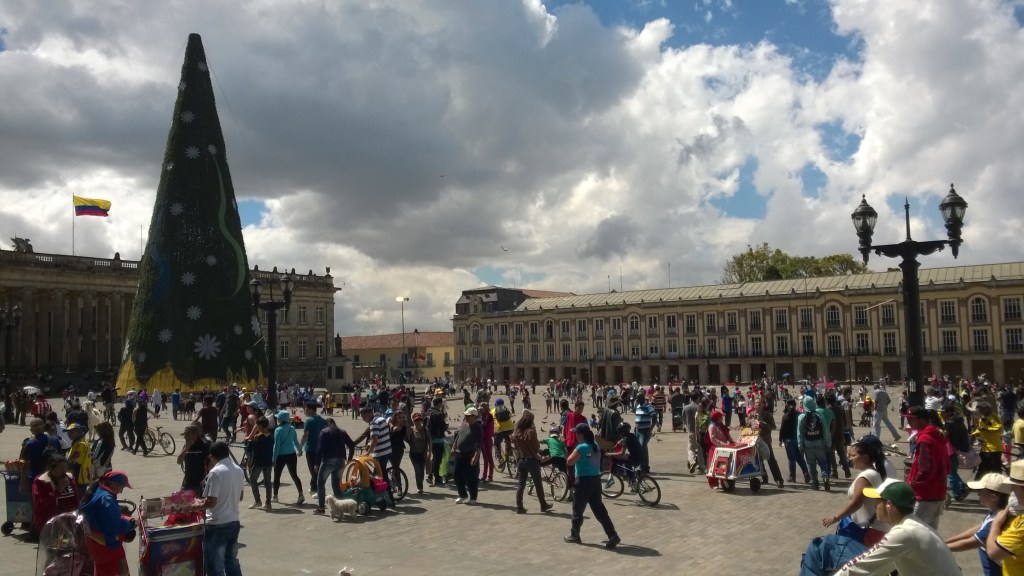
Capital of Colombia, the “Athens of South America”. Monserrate mountain is the backdrop for the city, and it’s an impressive view. As we were there on the run up to Christmas, the atmosphere was lively and decorations in the town were proudly on display. Large, decorated trees, filled with colourful lights, nativity scenes with people dressed in puppet costumes and bands playing on the streets were all on display.
St Augustin and Popayan
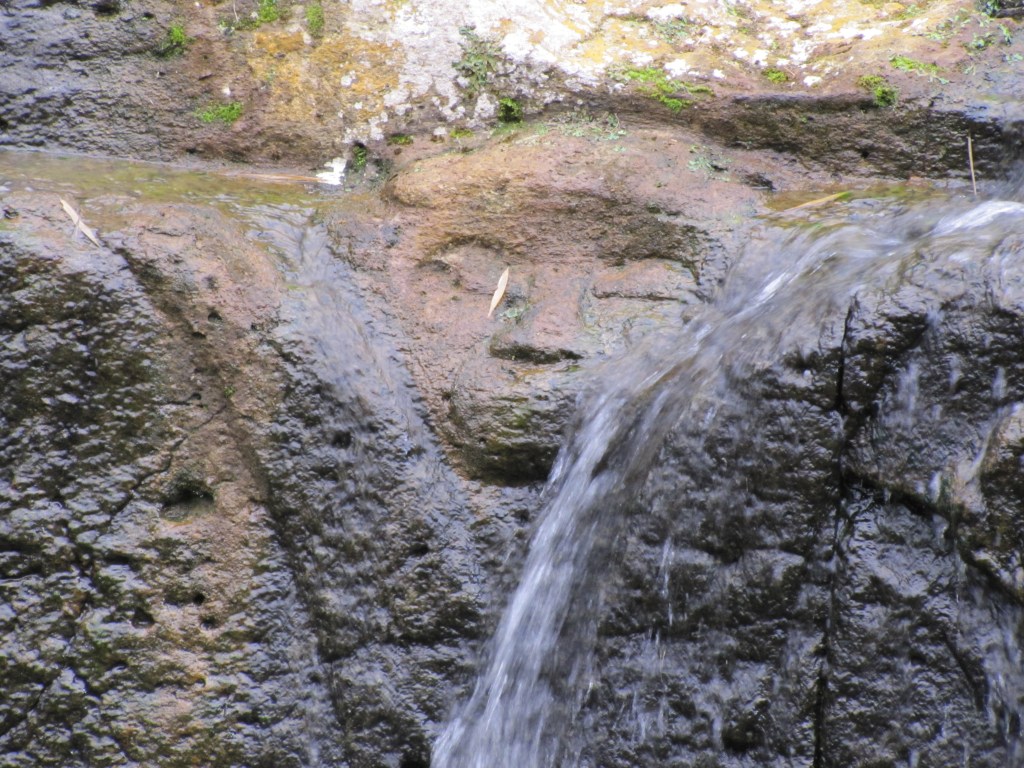
Colombia is home to some of the largest religious sculptures in South America. At the time, I didn’t fully appreciate the significance of the work but the Archaeological Park in San Agustin, is host to a site which is amazing.
It’s thought that the grounds and settlement dates to the periods between 1 – 900 AD.
There are pictures of Gods and animals, alongside the stone tombs of elite people of those times.
It was a comfortable bus ride from San Augustin to Popayan, known for the whitewashed buildings and colonial architecture. A short overnight stop prepared us for the goal of getting to Ciudad Perdida.
Ciudad Perdida
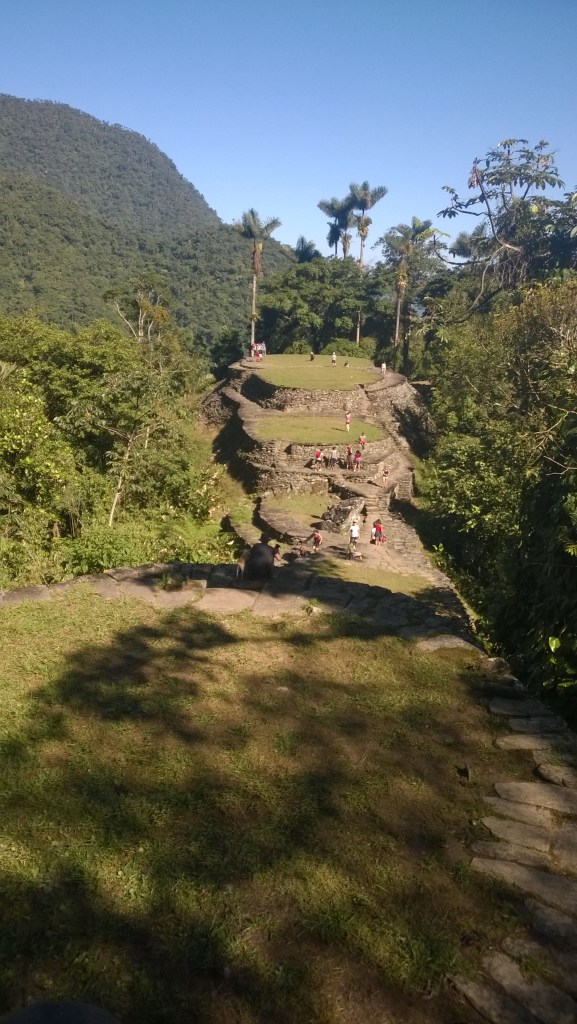
The lost city as it’s known, is an incredible place built more than a millennium ago from rammed earth and masonry by the Tairona peoples. It’s located in the region of Sierra Nevada de Santa Marta. Due to a pandemic in the 16th century, it was abandoned and most of the population were wiped out by disease.
We spent four days and nights exploring and hiking with a guide around the area and lead up to and over Christmas.
It’s a vast network of grass terraces and steps leading up to more terraces with some good views of the surrounding area. There are conservation projects as the government is keen to ensure that any natural resources and historic artefacts are preserved.
Palomino to Cartagena
Palomino is located around 70km from Santa Marta on the Caribbean coast.
We spent 3 days exploring this small beach town and relaxing before heading on to Cartagena.
I had heard a lot about Cartagena, so was eager to see it and spend some time there.
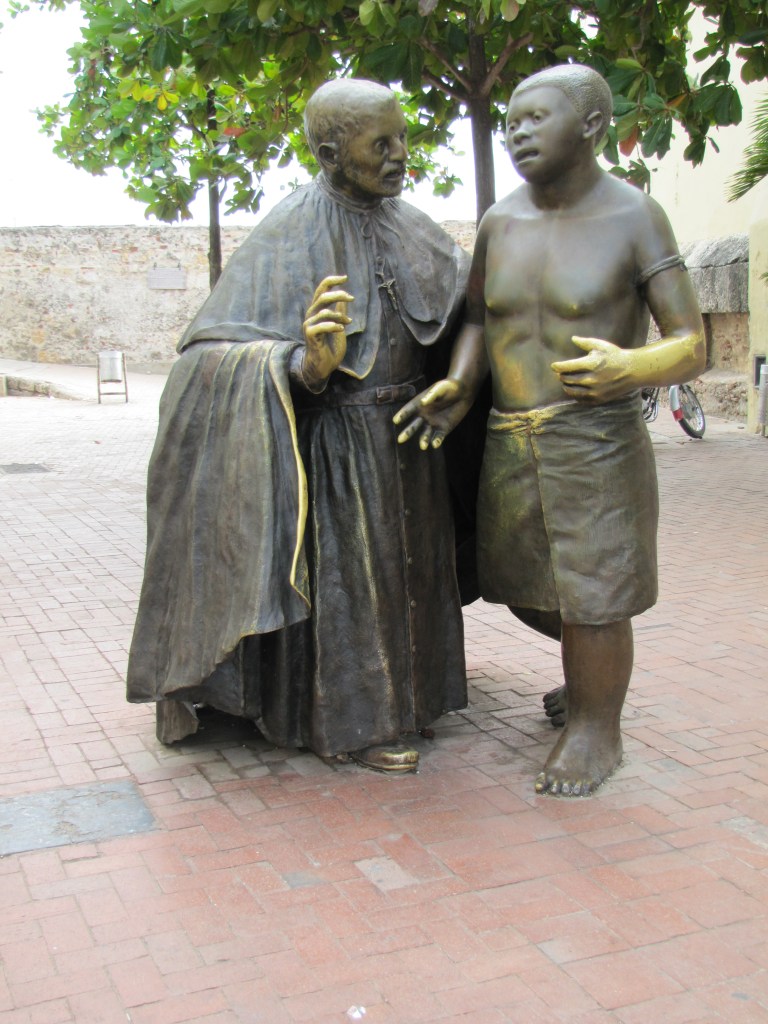
It’s one of South America’s oldest cities and was a key port for the trade of both Silver and enslaved peoples towards Spain. Because of its importance, it was a target for pirates (who wanted the silver).
Today, one of the striking things about Cartagena is the old walled city centre, streets lined with historic colonial buildings and the atmosphere. A mix of tourists and a diverse local population make a winning combination.
Outside of the walls, you get a feel for “real life”, and we spent some time wandering the streets, visiting local shops and people watching at the beach with a wonderful assortment of colourful characters.
We were lucky enough to be celebrating New Year’s Eve there and, dining outside within the confines of the walled city was a real experience. Perhaps it was because there were also quite a few tourists or maybe its always this way, but there was a contagious vibrant energy to the place.
From Cartagena, we were homeward bound and headed back to Bogota to soak up some city life and before flying back to London.
Highlights and Learnings
- Christmas day in Ciudad Perdida, it really is a “lost city”
- Cartagena, I loved the character of the place but also felt the tensions between the tourist centre within the walled city and the local population just outside
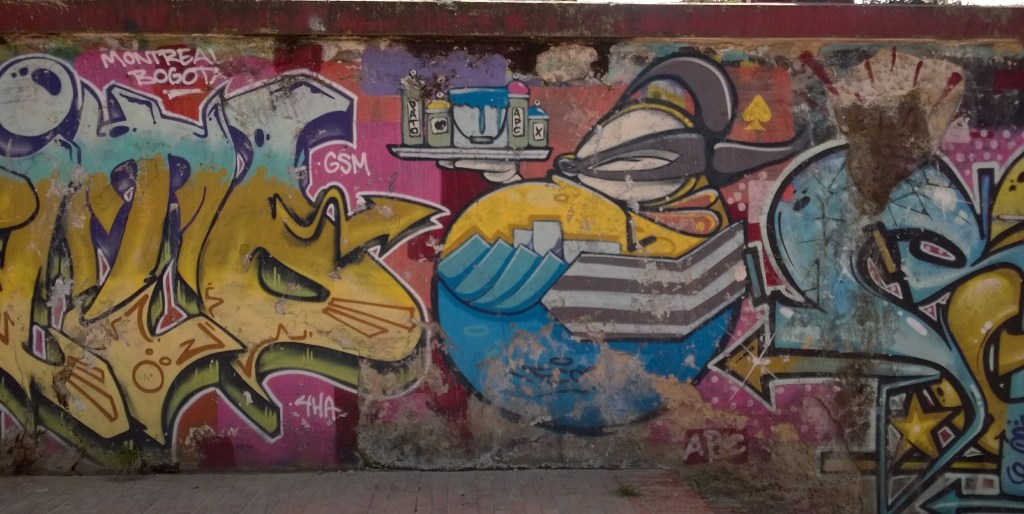
- Graffiti in Bogota. It’s not to everyone’s tastes but I’m a big fan of a little artistry done in the right way and in the right places
- There were lots of checkpoints, Army and Police personnel on roads and streets wherever we went and maybe because of or perhaps despite this, it felt like a safe place to be. I enjoyed my time in Colombia
 BOHOMAROON